Which Chimney Inspection Level Do You Need?
The three inspection levels aren't upsells, they're three different questions about the same chimney.
September 30, 2026 · 3 min read
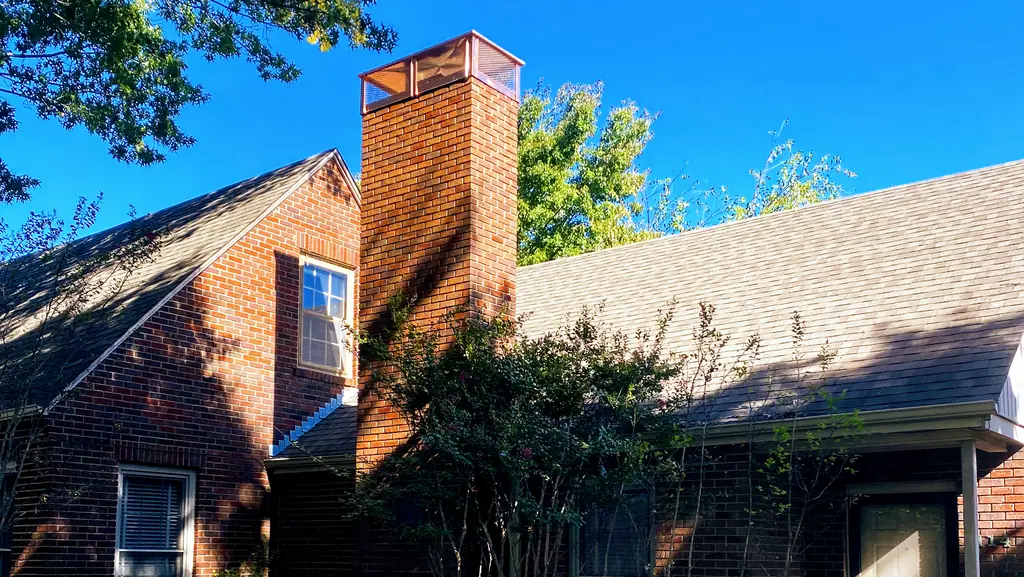
When you call about a chimney inspection, one of the first things you'll hear is a number: Level 1, Level 2 or Level 3. It isn't a way to run up the bill. The levels follow national safety guidelines, and each one answers a different question about your chimney. Which one you need depends on how the chimney has been used, whether anything has changed, and what's already been found. Here's how the three break down, in plain terms.
Why a chimney needs inspecting at all
A chimney works in a hard environment. It takes extreme heat on the inside and wind, rain and freeze and thaw on the outside. Over time that can mean cracked liners, deteriorating masonry, hidden leaks and creosote buildup. The trouble is that most of it happens out of sight. You can't see the inside of a flue from the living room, and a crack in a liner doesn't announce itself until smoke or heat ends up somewhere it shouldn't.
Routine inspections help reduce the risk of chimney fires, catch small repairs before they get big, identify water intrusion, and confirm the system drafts and vents the way it should. Our technicians are CSIA certified, so the person checking your chimney has been trained to know what they're looking at.
Level 1, Level 2 and Level 3
- Level 1 is for a system with no recent changes and regular use. It's a visual assessment of the accessible parts of the chimney to confirm it's still safe to operate.
- Level 2 is called for after a home purchase, a change to the system, relining, or a weather event. It includes a video scan of the flue liner, so damage you can't see from the top or bottom shows up on camera.
- Level 3 is for when a serious hazard is suspected. It may require limited removal of components so the inspector can reach concealed areas.
Think of Level 1 as the routine checkup. Level 2 is what you do when something has changed, or when you don't know the chimney's history. If you've just bought a house, you don't know what the last owner burned, how long it's been since the flue was looked at, or whether anything was patched badly. A video scan answers that. A storm can also move things around, from a cap knocked loose to masonry shaken by a hard strike, and a Level 2 looks at what a quick visual can't.
Level 3 is the rare one. It happens when an earlier inspection or a real symptom points to something serious behind a wall, under a surface or inside the structure, and the only way to confirm it is to open a small area up. It's about finding the truth, not about creating work.
What you get when we're done
A good inspection leaves you with more than a verbal opinion. Customers have told us the photos in their report were what finally made the findings clear: you see the actual crack, the actual buildup, the actual damaged crown, not just a technician's description of it. That matters because most people can't climb the roof or look up the flue themselves, and you shouldn't have to take anyone's word for what's up there.
The report should tell you what's fine, what needs attention and how urgent each item is. Sometimes the answer is that the chimney is in good shape and doesn't need cleaning, and that's a perfectly good outcome. If something does turn up, we can handle the follow-up work in-house, such as chimney liner repair or replacement, masonry repair, smoke chamber restoration and leak prevention, so the person who found the problem can also explain the fix.
How often should you schedule one
Annual inspections are recommended for homeowners who use their fireplace regularly, and for anyone who has recently purchased a home. If you burn wood through the cold months, once a year is the simplest habit that keeps you ahead of creosote and hidden damage. If you rarely light the fireplace, a visual check still makes sense on a regular basis, since weather and age affect a chimney whether you burn in it or not.
Top Hat Chimney & Roofing started in 1983 as a one man chimney sweeping service in Springdale, and inspections are still at the heart of what we do. If you're in Springdale, Fayetteville, Rogers, Bentonville or the River Valley and you're not sure which level you need, call (479) 751-0432 and we'll help you figure out where to start.
Top Hat Chimney & Roofing, (479) 751-0432
Call (479) 751-0432More articles
Keep Your Home Happy and Gutters Clean
A clogged gutter does its damage quietly, and by the time you see it the water has already gone where it shouldn't.
Professional Roofing & Gutter Repairs
Repair or replace: the answer depends on the damage, how much of the roof it touches, and how old the roof is.